Garden Clearance Ealing - Health & Safety Policy
 Garden Clearance Ealing is committed to maintaining a safe working environment for staff, contractors and the public during all garden clearance, waste removal and rubbish collection activities carried out across our rubbish company service area. This Health & Safety policy defines our approach to risk management, training, equipment use and incident response. It sets out clear responsibilities so that every member of the team understands their role in preventing workplace accidents and reducing health hazards associated with garden waste and bulky rubbish removal.
Our policy applies to routine clearance tasks, one-off garden clearances, and scheduled rubbish removal runs in the service area. The objectives are to:
- Prevent injury and work-related illness;
- Ensure safe handling and transport of organic and non-organic waste;
- Minimise environmental impact during removal and disposal operations.

Responsibilities and Roles
Company leadership is responsible for providing resources and supervision needed to implement this policy. Managers and supervisors must ensure that risk assessments are current, that necessary permits and site-based controls are in place, and that all operatives are briefed. Operatives and drivers are required to follow safety instructions, wear issued personal protective equipment and report hazards or near-misses promptly. Everyone has a duty to stop work if an unsafe condition is identified.Risk Assessment and Safe Work Procedures
Before any garden clearance or rubbish removal task, a documented risk assessment will identify potential hazards such as sharp objects, asbestos-containing materials, hazardous liquids, unstable structures, manual handling risks and traffic interaction on site. Where hazardous materials are suspected the area will be cordoned off and specialist removal arranged. Control measures will include exclusion zones, mechanical aids, chemical handling controls and appropriate waste segregation to reduce cross-contamination.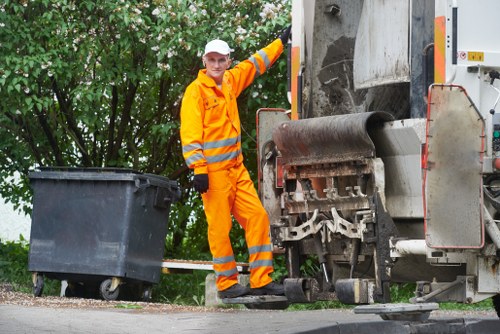 Personal protective equipment (PPE) is mandatory for tasks involving physical handling or exposure to dust and biological material. PPE includes gloves, eye protection, high-visibility clothing, steel-toe boots and respiratory protection where dust or fungal spores are likely. PPE selection will be based on the risk assessment and recorded in the job brief. Training in correct use and maintenance of PPE is provided during induction and refresher sessions.
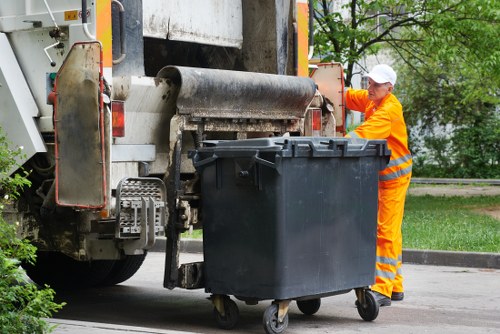
Manual handling procedures will emphasise team lifts, mechanical aids and correct lifting techniques to reduce musculoskeletal injury. For rubbish collection and garden waste removal in our service area, we standardise container sizes and loading procedures to prevent overloading. Vehicles and lifting equipment are inspected before use and maintained to the manufacturer’s schedule.
Vehicle safety and traffic management are critical elements when operating within public spaces or private driveways. Drivers must follow approved routes, park considerately, and use banksman guidance where visibility is restricted. Loading and unloading operations will be supervised, and spill kits kept on board to manage debris or small fuel/oil leaks to protect both workers and the public.
 Handling hazardous wastes such as chemical containers, contaminated soil, or suspected asbestos must follow segregation and containment procedures. These materials will be evaluated, labelled and placed in secure containment for transfer to licensed facilities. We will not accept materials that require specialist licensing without prior agreement and appropriate control measures in place. Records of hazardous waste movements are maintained as part of our operational logs.
 Training, competence and communication form the backbone of our safety approach. All operatives receive induction training covering site safety, vehicle operations, waste segregation and emergency procedures. Refresher training is scheduled regularly, and competency checks are documented. Pre-task briefings and toolbox talks reinforce safe systems of work and ensure teams are aware of site-specific risks and customer property considerations.
First aid provision, emergency response and incident reporting are essential. Adequate first aid kits are kept in vehicles and at main offices where applicable; trained first-aiders are allocated across teams. All accidents, incidents and near-misses must be reported immediately via the company reporting system so that corrective actions can be implemented to prevent recurrence. Recorded investigations will inform continuous improvement of procedures across the rubbish collection service area.
Monitoring, audit and review processes ensure the policy remains effective and up to date. Regular site audits, vehicle inspections and safety performance reviews are undertaken. Management will review this policy annually or sooner if operational changes or incidents indicate a need. Continuous improvement is pursued through lessons learned, staff feedback and industry good practice to maintain high standards in garden waste removal and other clearance activities.
This Health & Safety policy supports a culture of shared responsibility and professionalism for all garden clearance, garden waste removal and rubbish removal activities carried out by the company in its rubbish company service area. Employees are encouraged to contribute to safety improvements and to abide by all controls and procedures set out here. Compliance with this policy is a condition of employment and a practical commitment to the welfare of everyone who works with or is affected by our operations.