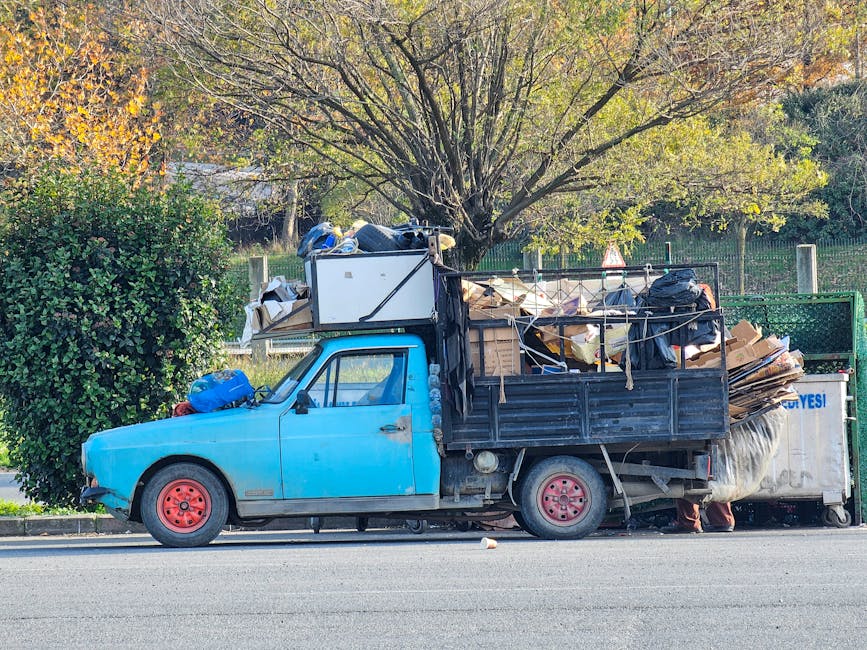
Common problems with bulky waste pickups on narrow streets
If you have ever tried to arrange a bulky waste pickup on a narrow street, you will know it can feel simple on paper and awkward in real life. A sofa looks manageable in the lounge. Then it has to turn a tight corner, pass parked cars, and somehow fit past a low wall, a shared gate, or a neighbour's bin that has mysteriously moved two inches into the path. That is where the trouble starts.
This guide explains the common problems with bulky waste pickups on narrow streets, why they happen, and what you can do to make the job smoother. It is written for homeowners, landlords, tenants, managing agents, and anyone dealing with awkward access in typical UK residential streets. The good news? A lot of the stress can be reduced with a bit of planning. Not all of it, mind you. Some streets are just stubborn.
Quick takeaway: narrow streets create access, parking, safety, timing, and handling problems that can slow down or even prevent a bulky waste collection. The fix is usually better preparation, accurate item details, and a collection plan that fits the street rather than fighting it.
Table of Contents
- Why this problem matters
- How bulky waste pickups work on narrow streets
- Key benefits of planning properly
- Who this is for and when it makes sense
- Step-by-step guidance
- Expert tips for better results
- Common mistakes to avoid
- Tools, resources and recommendations
- Law, compliance, standards and best practice
- Options, methods and comparison table
- Case study or real-world example
- Practical checklist
- Conclusion
- Frequently asked questions
Why Common problems with bulky waste pickups on narrow streets Matters
Narrow streets change the whole dynamic of a bulky waste pickup. On a wide road, the crew can usually stop close to the property, lift items out, and move on. On a tight residential street, every stage becomes more complicated: where the vehicle can park, whether neighbours can still get through, how far the crew has to carry items, and whether the collection can happen safely without blocking traffic.
That matters for a few reasons. First, bulky items are often heavy, awkward, or both. A wardrobe, mattress, broken chest freezer, or office chair stack is not something you want wobbling across a kerb while a delivery van waits behind it. Second, delays can create knock-on problems for residents and other road users. And third, a bad layout can increase the chance of damage to walls, door frames, floors, pavements, vehicles, and the waste itself.
There is also the human side of it. People often book a pickup because they are already clearing out a home, dealing with a move, or trying to get a property ready for sale or re-let. That is usually when they least want surprises. So yes, access issues are annoying. But more than that, they can turn a tidy plan into a messy afternoon very quickly.
In our experience, the streets that cause the most friction are not always the narrowest ones. Sometimes it is the combination of tight access, parked cars, low branches, and a collection window that lands right in school-run traffic. You can almost hear the sigh before the truck even arrives.
How Common problems with bulky waste pickups on narrow streets Works
A bulky waste pickup on a narrow street usually follows the same basic process as any other collection, but the logistics change. The crew needs to know what is being collected, where it is located, whether it can be moved to the front of the property, and whether there is enough space for loading without creating a hazard.
The main thing to understand is that the collection does not start at the vehicle. It starts at the property boundary, often earlier than that. The route from inside the home or garden to the street is where most problems appear: narrow hallways, stairwells, awkward corners, shared entrances, steps, front gardens, or a kerb that is slightly too high for comfort.
In practical terms, a collection team will normally be looking at:
- Access width for carrying items out safely
- Parking space for the vehicle, if one is needed close by
- Item size and shape, especially if furniture has to be turned or tilted
- Walking distance from the property to the loading point
- Possible obstructions such as bollards, bins, overgrown hedges, or parked cars
- Timing constraints such as rush hour, school runs, or loading restrictions
Sometimes the pickup is straightforward once the items are outside. Other times, the issue is that the street itself becomes the bottleneck. A mattress can be carried by two people, sure. Try doing that while avoiding mirrors, gateposts, and a neighbour returning with shopping bags. Not ideal.
If the access is especially awkward, it may help to think beyond a standard kerbside collection and look at a broader waste removal approach, or even a more specific service depending on the type of item. For example, a large mix of household items may fit better under home clearance or house clearance, while single pieces of furniture may be better handled through furniture clearance or furniture disposal.
Key Benefits and Practical Advantages
It may sound odd to talk about benefits when the topic is access trouble, but there are real upsides to planning properly. The biggest one is predictability. When the crew knows the street layout and the item details ahead of time, they can bring the right equipment, allocate enough time, and avoid the classic "we thought it would fit" moment.
Other practical advantages include:
- Less disruption for neighbours and passing traffic
- Lower risk of damage to property and items
- Faster turnaround on the day
- Safer lifting and carrying for everyone involved
- Better chance of successful reuse or recycling when items are sorted properly
There is also a planning benefit for people clearing out flats, basements, lofts, or commercial spaces where access is limited. If you know narrow access is going to be an issue, you can break the job into smaller stages and avoid trying to move everything at once. That helps with organisation, and frankly, it keeps tempers lower too.
For businesses, the same logic applies. A collection from a small office on a busy side street is often easier if it is scheduled around quieter periods and supported by a clear inventory. If the waste is from a workplace rather than a home, a dedicated business waste removal service may be more suitable, especially where regular collections or mixed office items are involved. For larger work-related clearances, office clearance can be a better fit.
Who This Is For and When It Makes Sense
This topic is relevant to more people than you might think. Narrow streets are common in older residential areas, terraced housing rows, mews-style streets, converted flats, and places with limited off-street parking. If you live somewhere like that, bulky waste pickup planning is not a nice-to-have. It is part of the job.
It is especially useful for:
- Homeowners clearing old furniture or white goods
- Tenants moving out of flats with shared entrances
- Landlords preparing properties between lets
- Estate and letting agents managing time-sensitive clearances
- Small businesses with awkward roadside access
- People clearing garages, lofts, or sheds where the only exit is a tight path or side passage
For example, a loft clearance in a terraced house can look easy until the ladder, landing turn, and front door all become part of the route plan. A garage clearance can be simple, unless the garage opens onto a narrow lane with cars parked right opposite. You get the idea.
If the property is a flat with shared access, the issue can be even more delicate. Hallway space, neighbours' mobility, fire exits, and building rules all come into play. That is where a service such as flat clearance may suit the situation better than a generic pickup.
Step-by-Step Guidance
If you want the collection to go smoothly, do not start with the waste. Start with the access. That one small shift in thinking saves a lot of trouble later.
- Measure the route. Check doors, hallways, stair turns, shared gates, front paths, and the distance from the property to the road. A tape measure is useful, but so is simply walking the route with your eyes open.
- List every bulky item. Note what the item is, whether it is intact, whether it can be dismantled, and whether it contains other materials like glass, metal, or foam.
- Identify the bottlenecks. Is it the front step? A sharp bend in the stairs? A parked car outside? A wall that narrows the path? Write it down.
- Take a few photos. Clear images of the street, entrance, and items help avoid confusion. This is one of those small things that makes a big difference.
- Move smaller items first. If possible, clear the route before collection day. Bins, bikes, plant pots, and loose clutter are the usual culprits.
- Check timing. Choose a time that avoids the busiest street traffic if you can. Early morning is often calmer than mid-afternoon, though not every street behaves politely.
- Confirm what happens if access is blocked. A neighbour's van, roadworks, or a delivery lorry can upset the best-laid plan. Have a fallback.
That sounds obvious, but obvious is exactly what gets skipped when people are rushing. Truth be told, most access problems are not mysterious. They are just unplanned.
Expert Tips for Better Results
Here is the practical stuff that tends to make the biggest difference on tight streets.
1. Be precise about item size
Saying "a sofa" is not quite enough. Is it a two-seater, a corner unit, or a sofa bed? Does it split? Are the legs removable? A few extra details can save a failed pickup attempt. The same applies to wardrobes, desks, and bed frames.
2. Think about the carrying angle
Some items will fit through a doorway only if they are turned awkwardly on end. That can work, but it needs space to manoeuvre. If your hallway is narrow and the stairwell turns sharply, that detail matters a lot more than the item label.
3. Keep the front route clear the night before
Do not leave it until collection morning if you can avoid it. At 8am, bins appear, neighbours leave for work, and the street becomes a moving obstacle course. Clearing the path the evening before is calmer and more reliable.
4. Use the street's quieter side if there is one
Some narrow streets have a side with less parking pressure or a wider section near a junction. If local conditions allow it, positioning the pickup point more strategically can reduce carry distance and speed up loading. Small win, but a useful one.
5. Separate reusable items from damaged waste
If you have items that are still usable, keep them apart from broken or contaminated waste. That helps sorting and can support more responsible handling. It also makes the job less chaotic on the day.
If you are clearing a mixed pile from a shed or outbuilding, a service like garage clearance can be more efficient than trying to schedule each item separately. For garden-related bulky waste, garden clearance may be a better fit, especially where the access is through a side return or narrow path.
Common Mistakes to Avoid
Narrow streets punish assumptions. A lot of collection problems come from small oversights that become big annoyances once the vehicle arrives.
- Not checking parking restrictions. If the truck cannot stop near the property, the carrying distance rises fast.
- Forgetting about neighbours' access. Blocking driveways or entrances causes friction. And rightly so.
- Underestimating stair or hallway constraints. A straight hallway is one thing. A tight turn with a radiator at knee height is another.
- Leaving loose items in the route. Shoes, plant pots, recycling bags, and pushchairs are classic trip hazards.
- Assuming every item can be carried by one person. Some things need two people or a different method entirely.
- Booking too little time. Tight streets and awkward items rarely run to the minute.
Another common mistake is not checking the wider collection category. For example, if you are clearing a loft stuffed with mixed household items, a focused loft clearance may be much smoother than treating it like a few isolated bulky items. Likewise, if the job involves a full property reset, house clearance or home clearance can be more practical.
Tools, Resources and Recommendations
You do not need fancy kit, but the right basics make a real difference. A simple tape measure, a phone camera, gloves, and a clear notebook can prevent an enormous amount of back-and-forth.
Useful tools and preparations include:
- Tape measure for door widths, corridors, and item dimensions
- Phone photos of the access route and the bulky waste
- Labels or notes to group items by type
- Basic protective gloves for moving loose pieces safely
- Floor protection if items have to be dragged or turned indoors
- Bin bags or boxes for small loose contents that would otherwise spill everywhere
Recommendations from a practical standpoint? Keep the area around the collection point boringly tidy. That sounds dull, but it works. A clear route, clear photos, and a clear list of items usually beat a heroic last-minute scramble.
If you are looking for a more structured service approach, it can help to review pricing and quotes early in the process, especially where access is awkward and the job may need more time than a standard pickup. If you care about what happens after collection, the page on recycling and sustainability is also worth a look.
Law, Compliance, Standards and Best Practice
Bulky waste collection on narrow streets is not only a practical matter. It also touches on safety, duty of care, and general public access. You do not need to become a rules expert, but you do need to respect the basics.
In the UK, waste should be handled responsibly, and the people carrying it should be able to do so safely. For residents and businesses alike, that usually means making sure items are prepared properly, access is reasonably clear, and waste is handed over in a way that does not create avoidable hazards.
Best practice typically includes:
- Keeping pavements and entrances as clear as possible
- Avoiding blocked emergency routes
- Reducing manual-handling risks by planning the carry route
- Separating hazardous or special items where needed
- Checking the collection provider's insurance and safety approach
If you are choosing a provider, it is sensible to ask about their health and safety policy and insurance and safety. Those pages are not just paperwork. They help show that the operator takes public access, staff safety, and property protection seriously.
For company or household data concerns, service terms and privacy information matter too. That is why it can help to review the terms and conditions and privacy policy before booking. Slightly dry reading, yes. Still worth it.
Options, Methods and Comparison Table
There is more than one way to handle waste on a narrow street. The best option depends on how much there is, what it is, and how tight the access really is.
| Option | Best for | Pros | Limitations |
|---|---|---|---|
| Kerbside bulky waste pickup | Items that can be placed safely near the road | Simple, usually quick, minimal handling if access is good | Can fail if parking or space is tight |
| Room-to-vehicle collection | Large items from inside the property | More convenient for the customer, fewer trips by the customer | Needs enough internal space and a workable route |
| Flat or shared-access clearance | Flats, maisonettes, and shared hallways | Better for multi-occupancy buildings and tighter routes | Requires more coordination and care around communal areas |
| Full home or house clearance | Multiple bulky items or a larger declutter | Efficient when there is a lot to remove at once | May take longer and need more planning |
| Specialist service by item type | Furniture, garden waste, garage contents, builders' debris | Tailored handling and better sorting | May need clearer upfront description |
For a lot of people, the winning move is not choosing the cheapest or quickest option blindly. It is choosing the one that fits the street. That one sentence saves headaches. If the items are mainly furniture, a focused furniture clearance or furniture disposal route may make more sense than a catch-all pickup.
Case Study or Real-World Example
Imagine a terraced house on a narrow London street. There is a sofa, a broken bed frame, two bookcases, and a few smaller pieces from the front room. On paper, not too bad. In reality, the street has cars parked on both sides, the front path is just wide enough for one person at a time, and the staircase has a hard turn halfway up.
The first instinct is often to leave everything by the front door and hope for the best. But that usually creates more problems. Instead, the better approach is to measure the front door, clear the hallway the evening before, dismantle what can be dismantled, and identify which items need two-person handling. A quick set of photos helps the collection team see what they are walking into.
On the day, the team can then plan the route, park where possible without blocking access, and move items in stages rather than all at once. The result is calmer, safer, and much less likely to annoy everyone on the street. Simple, really. Not always easy. But simple.
That same approach works for a small office on a side street, or a flat clearance where the stairwell is awkward and the lift is out. Good information beats guesswork every time.
Practical Checklist
Use this checklist before booking or on the day of collection.
- Have you measured doors, halls, stairs, and the path to the street?
- Have you listed every bulky item clearly?
- Have you noted anything that dismantles or needs two people?
- Have you checked for parking restrictions or access blockers?
- Have you cleared bins, bikes, plants, and loose clutter from the route?
- Have you taken a few photos of the access points and items?
- Have you separated reusable items from broken waste?
- Have you chosen a time that avoids the busiest street traffic if possible?
- Have you checked the provider's safety and insurance information?
- Have you read the service terms so you know what is expected?
If you can tick most of those boxes, you are already ahead of the game. That is not a small thing on a narrow street.
Conclusion
The common problems with bulky waste pickups on narrow streets usually come down to access, parking, carrying space, timing, and poor preparation. The streets do not have to be impossible, but they do need respect. Measure carefully, plan the route, describe the items properly, and choose the right service for the job.
For many households and small businesses, that is the difference between a smooth pickup and a stressful one. And honestly, with narrow streets, a calm plan is worth its weight in old wardrobes.
If you are weighing up the best route for your clearance, reviewing the available service pages and checking quotes early can save you time and hassle. A bit of preparation now often means a far easier day later.
Get a free quote today and see how much you can save.
Sometimes the smallest bit of planning turns a difficult street into a manageable one. That is usually the win.
Frequently Asked Questions
What makes bulky waste pickups harder on narrow streets?
The main issues are limited parking, reduced carrying space, tight turns, and the risk of blocking neighbours or traffic. Even one awkward obstruction can slow the whole pickup down.
Do I need to move bulky items outside before collection?
Not always. It depends on the service and the access route. Some collections work best with items ready at the curb, while others can remove items from inside the property if the path is safe and clear.
What should I measure before booking?
Measure the width of doors, hallways, stair turns, gates, and the route to the street. If space is tight, a few centimetres can make a real difference.
Can bulky waste be collected if parking is very limited?
Sometimes yes, but it depends on whether the vehicle can stop safely and whether the items can be carried a longer distance without problems. Limited parking often means extra planning is needed.
What if the sofa or wardrobe will not fit through the door?
Check whether it can be dismantled. If not, the item may need to be carried in a different orientation or handled as a special case. A careful assessment before the day helps avoid disappointment.
Are narrow street pickups more expensive?
They can be, depending on access difficulty, carrying distance, and the time needed. Not every awkward street costs more, but tricky access often affects the quote.
How can I reduce the risk of damage during collection?
Clear the route, protect floors where needed, remove loose objects, and make sure the collection team knows about tight corners or fragile surfaces in advance.
Is a flat clearance better than a standard bulky waste pickup?
For shared entrances, upper-floor properties, or multiple items, yes, it often is. A flat clearance can be more suitable when access is awkward and the job involves more than one or two items.
What type of clearance suits mixed household items?
If you have several items from different rooms, a broader home clearance or house clearance may be more efficient than booking item by item.
Should I mention access issues when asking for a quote?
Absolutely. The more honest and specific you are, the more accurate the quote is likely to be. Mention parking pressure, narrow passages, stairs, and anything that might affect the route.
What items are most troublesome on narrow streets?
Large sofas, wardrobes, mattresses, beds, freezers, and bulky office furniture are often the hardest because they are awkward to turn and carry safely.
How far in advance should I plan a pickup?
As early as possible if access is tight. That gives you time to measure, photograph the route, clear obstacles, and check the best collection method for the property.
Can I combine furniture and garden waste in one pickup?
Often yes, but it depends on how the items are presented and whether the collection is set up for mixed loads. If the load is varied, a wider waste removal approach may be the better choice.
Where can I get help with a narrow-street collection?
If you need a collection that handles awkward access carefully, it helps to review the relevant service pages and then use the booking or enquiry route that best fits your situation. A quick look at about us can also help you understand the approach and service standards before you decide.